Green Street has served as a dividing line for over a thousand years. Today it stands as one of Britain's most vibrant multicultural commercial corridors.
An Ancient Boundary
Green Street marks the historic boundary between East and West Ham, a division dating to the 10th or 11th centuries when the Manor of Ham was subdivided. The first surviving written record of the street dates from the 15th century, though historians believe it is significantly older and pre-dates the partition itself. The boundary once extended north through part of Epping Forest and south through the marshes to the Thames.
The northern section near Romford Road was known locally as "Gypsy Lane" because Romani people used it as a thoroughfare until the area urbanised during the 19th century. The southern extension originally terminated in the marshes and was known as "Blind Lane" before being renamed Boundary Road. Green Street House, also called "Boleyn Castle," stood on the street for more than 400 years until its demolition in 1955.
The Market Moves In
The street's commercial character began in the late Victorian era when a street market emerged at the boundary between East and West Ham. Stall holders moved to Queen's Road in 1904 to stop obstruction of the main thoroughfare and allow tram passage. Originally, English Cockney, Romani, and Jewish traders from Whitechapel and the East End sold clothing and vegetables. The market operated in its new location for decades before undergoing its most significant transformation.
South Asian Settlement
From the late 1960s and throughout the 1970s, South Asians from India, Pakistan, Bangladesh, Sri Lanka, and Asian-African backgrounds began moving families into homes locally. They established stalls and shops along Green Street and inside Queen's Market. By 1981, more than half of Newham's Upton and Kensington wards were of ethnic minority origin.
The 1990s saw large-scale Asian migration into the area, which gave Green Street its nickname "Little India." The 2001 Census identified Newham as the most ethnically diverse district in England and Wales. According to the 2021 Census, the Bangladeshi community showed the largest numerical increase of any nationality in Newham over the previous three decades. Today, the combined population of Green Street East, Green Street West, and Boleyn wards stands at 46,980, with White British residents comprising just 4.8 per cent in both Green Street East and Green Street West; the joint-lowest proportion in London.
A Pan-Asian Commercial Hub
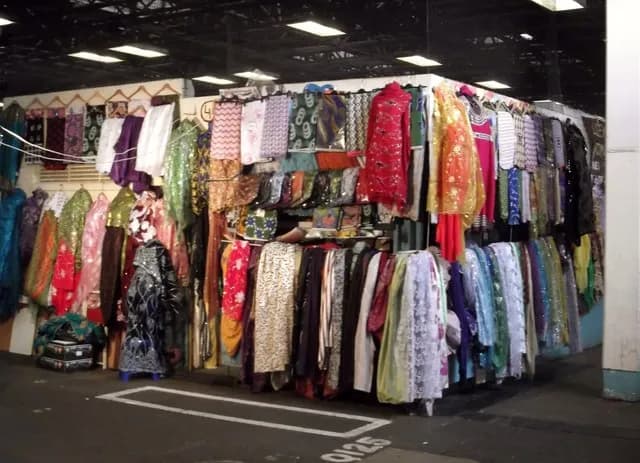
Green Street now hosts approximately 300 shops stretching for roughly a mile. The retail mix reflects the area's diversity: South Asian businesses selling food, jewellery, and fabrics sit alongside Afro-Caribbean food stores specialising in Caribbean and African goods. Gold and fabric shops remain staples of the street, with morning and afternoon gold prices from the London Gold Exchange chalked up along the pavement.
Queen's Market continues to operate four days weekly, plus a Sunday market for second-hand goods. It serves African, Afro-Caribbean, South Asian, South American, and newer European communities. The market's specialist retail offer includes South Asian and African food and textiles. Newham Council notes the market hosts events for Eid and Diwali.
Fashion and Cultural Reach
The area has developed particular renown in South Asian fashion. Chiffons London, a saree house in Forest Gate on Green Street run by fashion designer Bubs Mahil, has made costumes for Bollywood actress Aishwarya Rai and created a Nehru jacket for former Prime Minister Tony Blair and clothing for Cherie Blair. The business has also dressed Prince Buthelezi, Richard Branson, cricketer Mark Ramprakash, and entertainers including Britt Ekland, Parminder Nagra, Gurinder Chadha, Meera Syal, Myleene Klass, and Joss Stone.
Local Distinction
Green Street differs from other London ethnic enclaves in its genuinely pan-South Asian character. Whereas Brick Lane focuses predominantly on Bangladeshi culture and Southall has a strong Punjabi character, Green Street serves Indian, Pakistani, Bangladeshi, Sri Lankan, and Asian-African communities simultaneously, alongside its substantial Afro-Caribbean population.
Writing in the Evening Standard in 2012, journalist Simon Jenkins described Green Street as "the new Asian Bond Street" and "true Little Asia," noting that "were it not for the roof gables and bargeboards, it might be a street in Bombay or New Delhi." Jenkins observed that the area makes "Southall seem as English as Cheltenham" and noted it is "free of the gangsterism of Tower Hamlets and West London enclaves; families are for real."
The "Glocalised" Economy
Green Street businesses operate in what researchers describe as a "glocalised" economy. Local shops take measurements from customers, send designs online to factories in Delhi or Bombay, and receive finished garments via courier within days. This global supply chain operates from modest family-run shops in terraced houses, a format that has resisted large-scale redevelopment despite periodic pressures.
Contested Space
The street has faced development pressures. In 2006, Newham Council proposed redeveloping the Queen's Market site to include a supermarket and luxury housing above a smaller covered market. The plan faced vigorous local opposition. In May 2009, then Mayor of London Boris Johnson directed Newham Council to refuse planning permission, preserving the market in its existing form.
Historical Footnotes
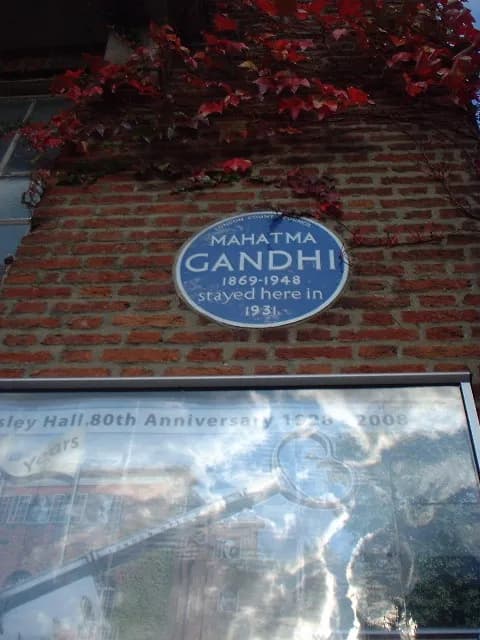
The area's radical political history includes a 1931 visit by Mahatma Gandhi, who was in London for Round Table Conferences. Based at Kingsley Hall in nearby Bromley-by-Bow, Gandhi reportedly attended several West Ham football matches, visited the Boleyn Tavern, and drank cream soda while discussing football and radical politics. West Ham United played at the Boleyn Ground on Green Street from 1904 until the club's relocation in 2016.
Queen's Market also launched an unlikely viral star. Muhammad Shahid Nazir, known as the "One Pound Fish Man," became a YouTube sensation in 2012 while working as a market trader. He subsequently released a single in December 2012.