On the evening of 19 January 1917, a fire at the Brunner Mond chemical works in Silvertown ignited approximately 50 long tons of TNT, causing an explosion that killed 73 people, injured more than 400, and damaged an estimated 70,000 properties across Newham and beyond. The blast remains the deadliest accidental explosion in London's history, and its effects reshaped the industrial landscape of the borough for a century.
The Brunner Mond Works and Wartime TNT Production
The Brunner Mond & Co. chemical works had stood on the south side of North Woolwich Road since 1893, originally producing soda crystals and caustic soda. In September 1915, amid the shell crisis of the First World War, the War Office ordered the factory to convert part of its operations to purifying TNT using a vacuum process invented by the company's chief scientist, F.A. Freeth. The factory was soon handling roughly nine long tons of TNT each day, despite being situated in a densely populated residential neighbourhood where few alternative employment options existed.
Warnings Before the Blast
According to accounts attributed to Freeth, the scientific staff repeatedly warned Silvertown management that the purification process was manifestly dangerous and that the plant would eventually explode. These warnings were reportedly dismissed; officials maintained that the production was worth the risk. A safer and more efficient TNT plant at Gadbrook had already been built in 1916, yet the authorities refused to close the Silvertown facility even after the alternative was operational.
The Fire and the Explosion
At approximately 6:52 p.m. on Friday, 19 January 1917, a fire broke out in the melt-pot room of the TNT purification plant. Andrea Angel, the 40-year-old chief chemist and an Oxford don, was alerted by worksman George Wenbourne and immediately urged the factory staff to flee while he and others attempted to extinguish the flames. Within minutes, the fire reached roughly 50 long tons of TNT stored in railway goods wagons and elsewhere on the site. The resulting blast destroyed the TNT plant entirely and was heard as far away as Sandringham in Norfolk and the Sussex coast.
Devastation Across Newham
The explosion obliterated the adjacent Venestas plywood works and Silvertown Fire Station, where firemen had just arrived and were laying hoses. St Barnabas' Church in West Silvertown lost its chancel and church hall, while the nearby Millennium Mills was destroyed. A gas holder on the Greenwich Peninsula caught fire, creating a fireball visible from Maidstone and Guildford. Across the borough, approximately 900 properties were destroyed or damaged beyond repair, and some estimates suggest up to 70,000 buildings suffered damage overall. Red-hot debris started fires for miles around.
The Human Cost
The death toll of 73, while lower than it might have been because the factories were largely empty on a Friday evening, included many who had stayed to fight the fire. Angel and Wenbourne were both killed; they were posthumously awarded the Edward Medal for their attempts to save others. Several firemen from Silvertown Fire Station died at their posts. Police Constable Edward George Brown Greenoff, who was on duty in the area, also lost his life and was later awarded the King's Police Medal. More than 400 people were injured, and thousands were left homeless.
Rescue, Relief and Reconstruction
Emergency services, the Salvation Army under Catherine Bramwell-Booth, and YMCA volunteers responded immediately, setting up first-aid stations in the streets and providing food and hot drinks to survivors. Thousands of displaced residents were sheltered in schools and churches. Sir Frank Baines directed the clear-up operation, and by February 1917 around 1,700 men were employed in reconstruction. Parliamentary records show that £3 million in aid was paid to those affected, with a further £1 million directed to local businesses and factories. The area's housing, already described in Parliament as "gravely prejudicial to the public health," prompted debate about whether residents should be moved to a garden city rather than rebuild the dilapidated district.
The Inquiry and its Suppression
The Ministry of Munitions commissioned an inquiry led by Sir Ernley Blackwell, whose report was published on 24 February 1917. It concluded that no definite single cause for the fire could be determined, and it dismissed early theories of German sabotage or an air raid. The inquiry found that the factory site was inappropriate for TNT manufacture, that storage containers were unsafe, and that the production process was inherently risky. The report was not disclosed to the public until the 1950s.
Commemoration and Regeneration
In the 1920s, Brunner Mond erected the Silvertown War Memorial, a Grade II listed limestone obelisk that originally stood at the factory entrance on North Woolwich Road. The memorial bears the names of 18 workers killed in the explosion, including Andrea Angel, alongside those who died in both world wars. It was relocated in 2016 to the Royal Wharf development, closer to the River Thames, where relatives gathered for a centenary service on 17 January 2017. PC Greenoff is remembered with a plaque on the Memorial to Heroic Self-Sacrifice in Postman's Park in the City of London.
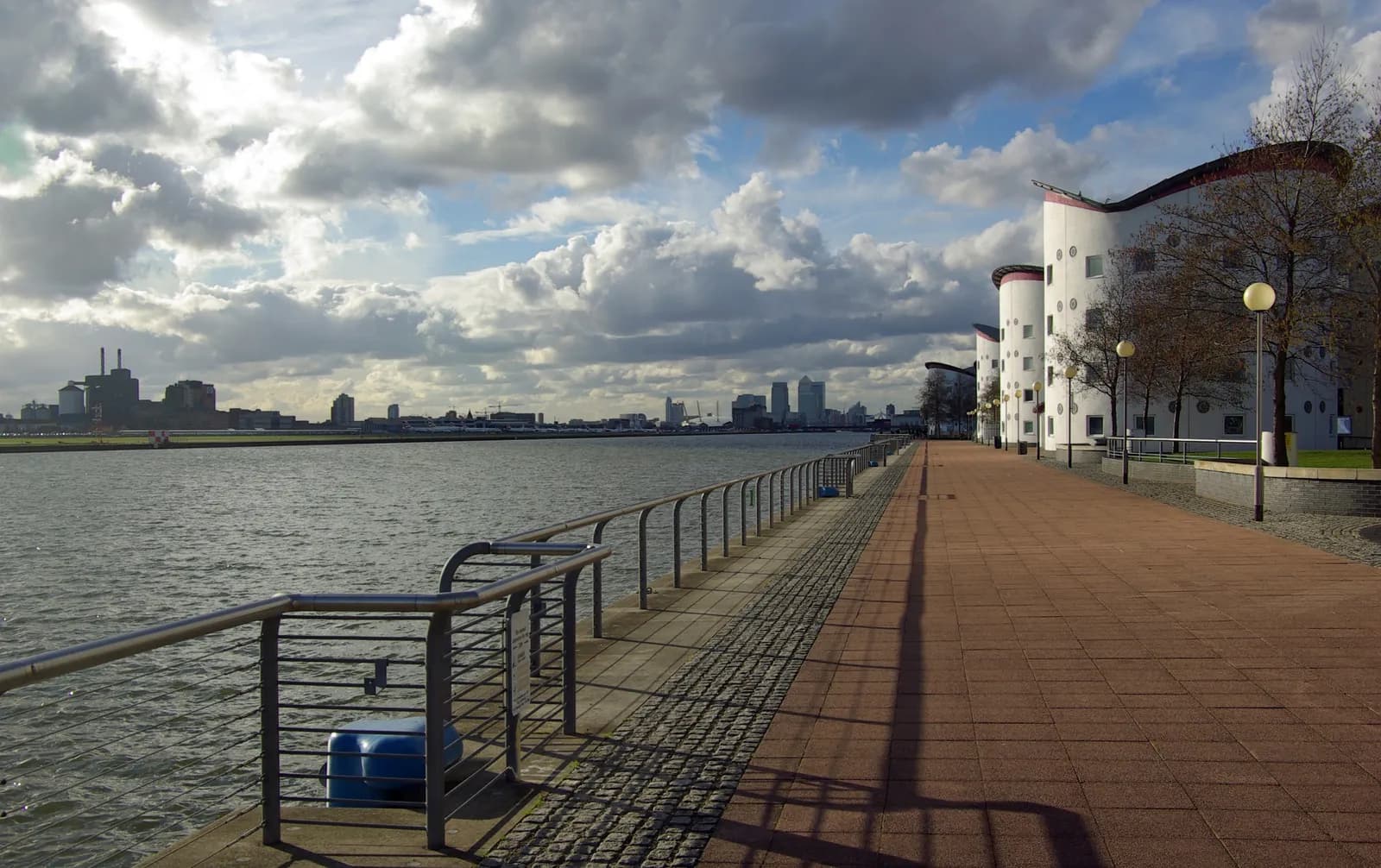
The factory site itself remained largely vacant for nearly a century, serving for decades as a car park for Barrier Park, until the £3.5 billion Silvertown Quays and Royal Wharf regeneration scheme began transforming the waterfront in the 2010s. The explosion that once levelled much of Newham is now recalled chiefly through its memorials and the slow physical rebirth of the landscape it scarred.
What Is Confirmed
The date, time, location and broad circumstances of the explosion are well documented in official and historical records. The identities of Andrea Angel, George Wenbourne and PC Edward Greenoff are confirmed through contemporary sources and official honours lists.
What Is Unclear
The precise cause of the initial fire in the melt-pot room was never definitively established. Published estimates of property damage vary considerably, with figures of £250,000 and £2.5 million both appearing in historical accounts.