From medieval churches and Tudor timbers to Victorian engineering and the rebirth of the Royal Docks, Newham’s buildings tell the story of a borough that has never stopped changing.
One of the things I love about Newham is that history rarely announces itself.
There are no velvet ropes around it. You do not need a ticket, a guidebook or an afternoon to spare. It is simply there, waiting beside the traffic, the shops and the ordinary journeys we make every day.
I can walk past a medieval church on my way to the high street, follow the River Lea towards one of Britain’s great surviving mills, or stand beside the Royal Docks and imagine the ships, cranes and dockworkers that once defined this part of east London.
Newham’s history is not hidden away in a museum. Much of it is still standing.
Where Newham Began
Long before Stratford became associated with shopping centres, international trains and the Olympic Games, small communities were already growing around the churches and lanes of what would eventually become Newham.
St Mary Magdalene in East Ham is one of the borough’s oldest and most remarkable survivors. Parts of the church date back to the 12th century, making it difficult to pass without wondering about the generations who have walked through its doors before us.
A little further north, St Mary the Virgin in Little Ilford offers another glimpse of the borough before the arrival of railways, factories and dense rows of Victorian housing.
These churches are more than historic monuments. They remain part of community life, continuing a role they have played for hundreds of years. I find something reassuring in that. Newham may have changed almost beyond recognition, but people are still gathering in some of the same places.
A Landscape Built by Work
As Newham grew, its buildings began to reflect not only faith and community, but labour, engineering and ambition.
At Three Mills, the House Mill rises beside the River Lea as a reminder of the time when water powered industry. Built in 1776, it is believed to be the largest surviving tidal mill in the country.
It is one of those buildings that makes the modern city briefly fall away. Stand beside it and it becomes easier to picture the old waterways crowded with barges, grain arriving to be milled and the river acting as both road and engine.
Then there is Abbey Mills Pumping Station, surely one of the grandest buildings ever constructed to deal with sewage.
Its ornate towers and richly decorated brickwork make it look more like a palace than a piece of Victorian infrastructure. Yet it formed part of the extraordinary engineering work that transformed London’s sanitation and helped make the expanding city safer to live in.
The Victorians did not always build quietly. Even their pumping stations arrived with a sense of theatre.
The Docks That Changed Everything
For me, nowhere captures Newham’s dramatic transformation quite like the Royal Docks.
The opening of the Victoria Dock in the 1850s marked the beginning of a new industrial age for the area. It was followed by the Albert Dock and King George V Dock, creating a vast centre of international trade.
Goods, people and ideas arrived here from across the world. Thousands of local families depended on the docks, directly or indirectly, and entire neighbourhoods grew around the work they provided.
Walking beside Royal Victoria Dock today, the landscape feels open, modern and almost futuristic. The cable car passes overhead, City Hall sits beside the water and new buildings continue to rise.
Yet the scale of the dock itself tells you that something enormous happened here.
The ships and warehouses may have changed, but the water remains, stretching out like a physical memory of the industry that created modern Newham.
History in Familiar Places
Some of Newham’s most revealing buildings are not grand industrial monuments at all. They are places residents may have passed hundreds of times without stopping to study them.
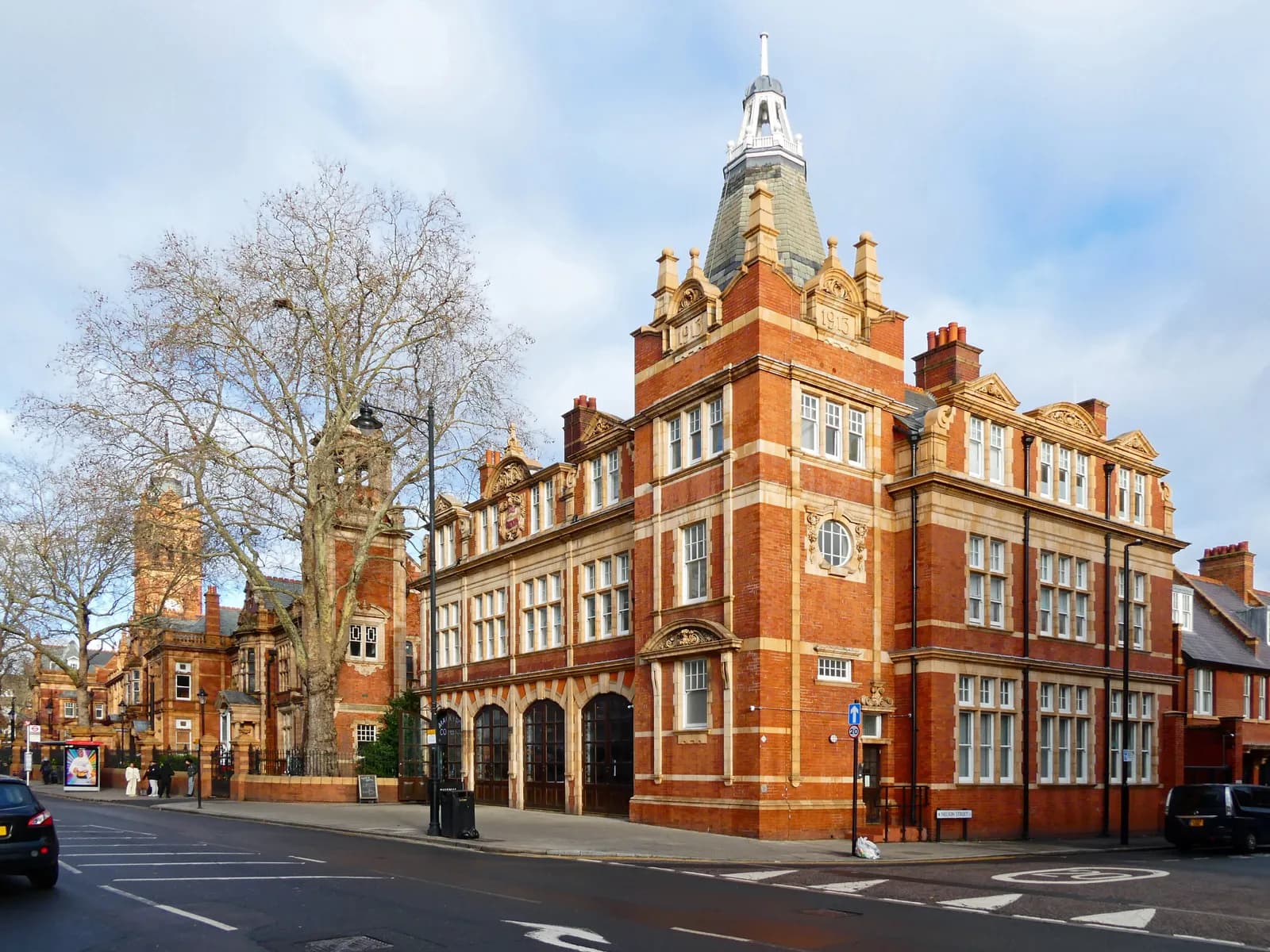
Newham Town Hall, originally East Ham Town Hall, is one of the borough’s great expressions of civic confidence. Its Edwardian architecture belongs to an age when rapidly growing local authorities wanted their public buildings to project permanence, pride and serious purpose.
For more than a century, decisions affecting local streets, homes and services have been debated within its walls.
Then, in Forest Gate, there is the Spotted Dog.
Behind the appearance of an old neighbourhood pub lies a building with Tudor origins, widely regarded as Newham’s oldest surviving secular building. Its timber frame has outlasted epidemics, industrial expansion, wartime bombing, redevelopment and generations of changing London life.
It is precisely the sort of place that makes local history so fascinating. You can pass it without a second glance, never realising that its walls were already old before much of the surrounding area existed.
Newham Is Still Building Its History
The story does not end with medieval stone, Victorian brick or abandoned dock machinery.
Newham is still adding new chapters.
City Hall’s move to the Royal Docks has brought a new civic role to the waterfront. Millennium Mills, once a symbol of industrial decline, is becoming part of a wider regeneration story. In Stratford, the Olympic Park has permanently altered the skyline and the way the area is seen by the rest of the world.
Not every change has been simple, and regeneration always raises questions about who benefits, what is preserved and what might be lost. That, too, is part of Newham’s history.
This borough has never stood still. It has repeatedly absorbed new arrivals, new industries, new communities and new ideas. Its buildings show the results, sometimes beautifully and sometimes awkwardly, often within the space of a single street.
That is what makes walking through Newham so interesting.
I am not simply moving through a modern London borough. I am passing medieval villages, Tudor survivals, Victorian engineering, dockland industry and 21st-century reinvention.
The borough’s buildings do not tell one neat story. They tell hundreds of overlapping ones.
Together, they reveal a place shaped by faith, work, migration, invention, decline and renewal. A place that has been rebuilt many times, but has never completely erased what came before.
In Newham, history is not somewhere we visit.
It is something we walk past every single day.